Address: Jr. Monsefú 903, Urb. Zona Industrial Lima, Lima, Peru
Mail: info@www.laurusperu.com
Phone: + 51 01 336-5412


Address: Jr. Monsefú 903, Urb. Zona Industrial Lima, Lima, Peru
Mail: info@www.laurusperu.com
Phone: + 51 01 336-5412

Address: Jr. Monsefú 903, Urb. Zona Industrial Lima, Lima, Peru
Mail: info@www.laurusperu.com
Phone: + 51 01 336-5412


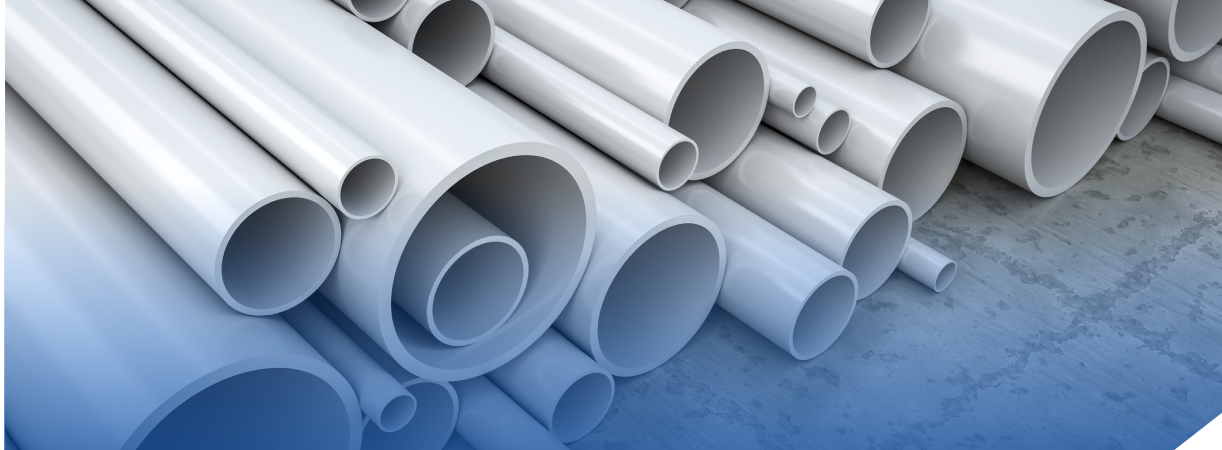

Nowadays the plastics industry is frowned upon for being made up of short-lived consumer products that pollute the environment. However, not all plastics should be classified in the same way, one of these exceptions is PVC (polyvinyl chloride) plastic.
PVC has a wide application in long-lasting products, among which 64% have a life cycle of up to 100 years (pipes, window profiles, sanitary plumbing and other construction accessories); 24% belong to a life cycle that varies from 0 to 15 years (packaged products, bottles, bags, toys, car pieces, buckets, suitcases, etc.). About 12% are estimated to have a short life cycle. Its discovery was a coincidence, being discovered independently 3 times by researchers.
One of the first investigations was performed in 1838, by the French physicist and chemist Henri Victor Regnault, who produced the vinyl chloride when he treated dichloroethane with an alcoholic solution of potassium hydroxide through direct exposure of the monomer to daylight, and a polymer appeared in a white solid state inside the jars. However, he didn’t understand the polymer that he had synthesized nor did he know how to apply it in practical means, leaving this discovery aside.
The second discovery was in 1872, with the investigations of the German Eugen Baumann. While testing the reaction of several vinyl halides and acetylene in a sealed jar exposed directly to daylight, a polymerization occurred, and a white powder emerged that was unaffected by solvents and acids and maintained stability at temperatures lower than 130°C. But like his predecessor, he found no applications for this nascent new product and it is once again forgotten.
The final discovery belongs to Waldo L. Semon, through the company BF Goodrich, who hired him to develop a synthetic substitute against natural rubber. After several attempts, in an initial phase, he managed to manufacture a non-conductive gel, resistant to water and with good mechanical properties and, finally, the first uses of PVC emerged: raincoats, shower curtains and umbrellas. Later, due to its incredible flexibility and elasticity, it was able to acquire a greater field of application from cables, shoe heels and soles, among others. Despite PVC having been discovered years ago, Waldo L. Semon was the one who registered its patent and who gave it the most utility, on October 10th of 1933, for a method of manufacturing plasticized PVC.
In our next blog post, we will go into more detail about rigid, unplasticized, PVC.
Sources:
-"El plástico: una historia de más de 100 años de innovación''. PlasticsEurope https://www.plasticseurope.org/es/about-plastics/what-are-plastics/history. Accedido 08/06/2021
-Arístides Sotomayor/George Power. Tecnologías limpias y medio ambiente en el sector peruano. Casos prácticos. 1era ed.,2019, págs. 404-411. Accedido 09/06/2021